
Bees & biodiversity
Different beehives: a curious beginner’s tour
National, Langstroth, top-bar or something beautifully traditional? The box changes how you work, not what the bees need.
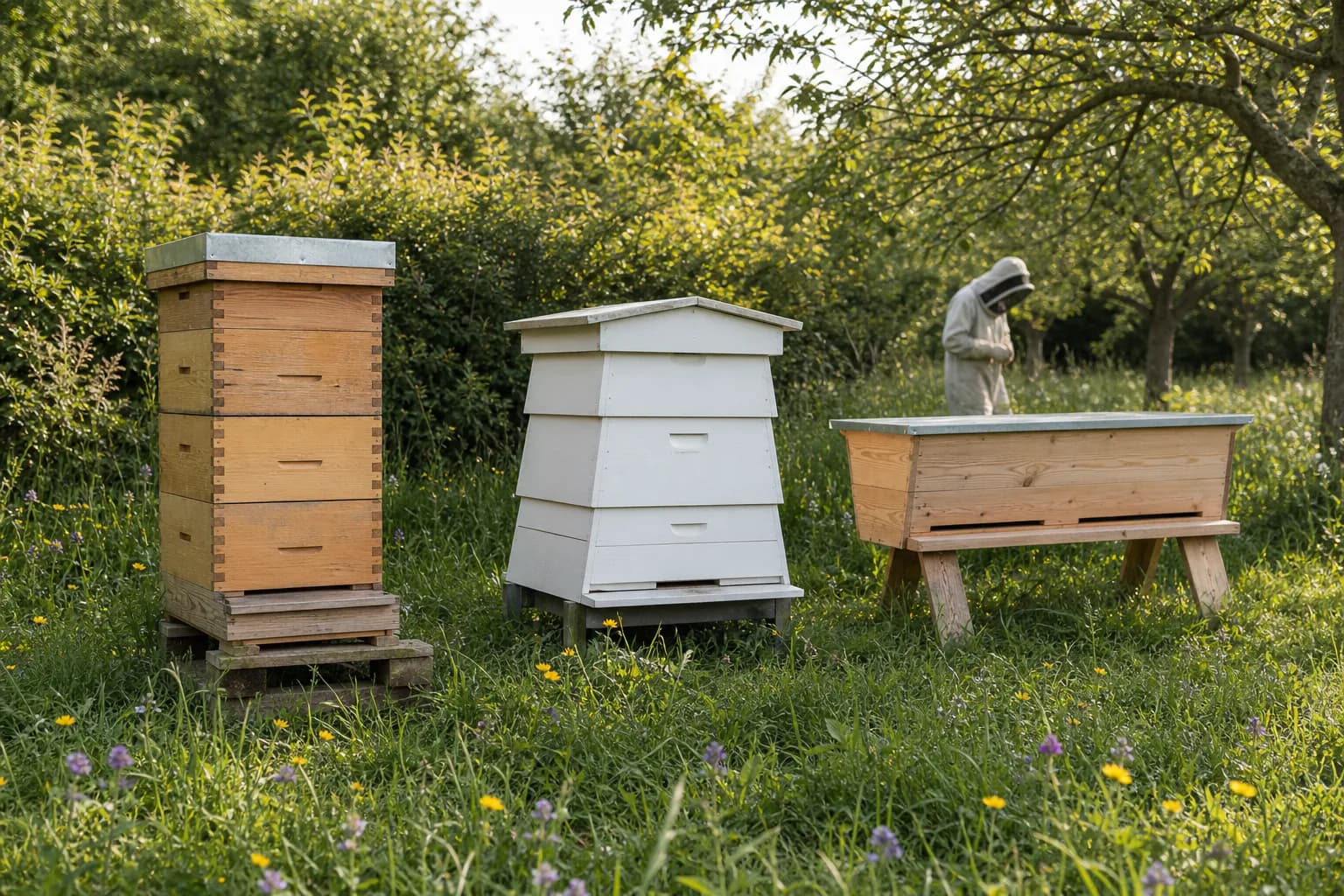
The familiar framed hives
National hives are a common sight in UK apiaries. Their square boxes and removable frames make inspections and equipment sharing straightforward. Langstroth hives use a similar stacked principle with dimensions common in many countries, which can suit beekeepers who value broad equipment availability.
Either style can become heavy when full. Think about the lifting, storage and spare parts before settling on a format, especially if several people will help with the bees.
Long hives and top bars
Horizontal hives keep more of the work at one height. Top-bar hives encourage bees to build comb from bars rather than inside conventional frames, which appeals to people who enjoy a lower-intervention style. Comb handling is different and can be less forgiving, particularly when it is warm or unsupported.
A long hive fitted with standard frames can combine horizontal access with familiar equipment. It takes more ground space, but avoids repeatedly lifting full boxes.
Choose the support network
For a first hive, local knowledge can matter more than theoretical perfection. If a nearby association teaches on Nationals and can lend compatible kit, that is a powerful advantage. Hands-on training also makes inspections calmer for both beekeeper and bees.
Before keeping honey bees, learn about swarm management, disease checks, neighbour considerations and the year-round responsibility involved. Sometimes the best first step for pollinators is planting a long season of flowers and leaving safe nesting habitat for wild bees.
- Visit several working hives before buying one.
- Check the weight of a full box, not just an empty one.
- Choose dimensions with readily available spare parts.
- Join a local beekeeping association and learn alongside someone experienced.