
Growing technology
Hydroponic devices: what is actually useful?
Countertop pods, deep-water buckets and vertical towers all grow without soil—but they solve very different problems.
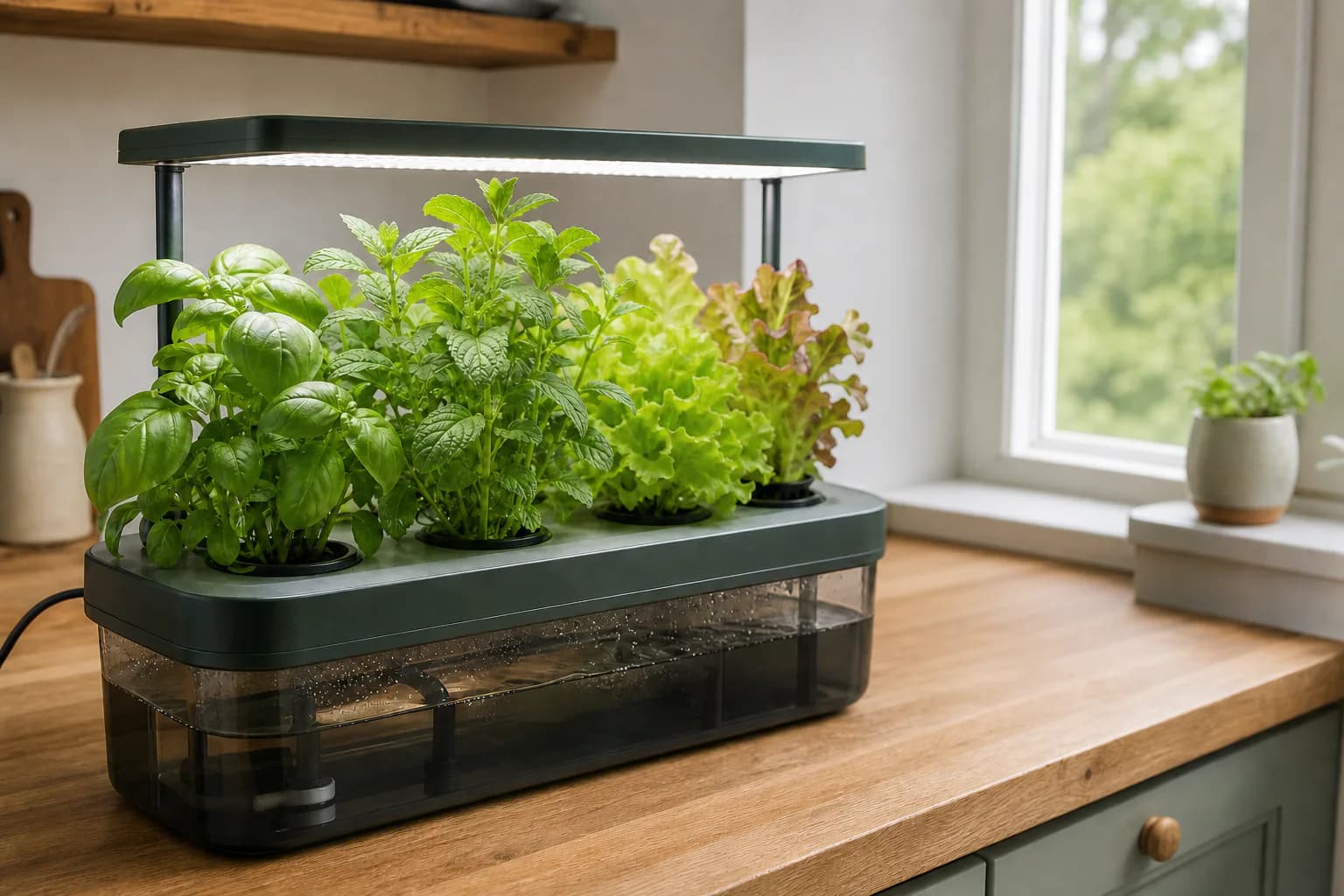
Start with the crop, not the gadget
Compact countertop systems are brilliant for herbs and small salads. They are less convincing for sprawling tomatoes, thirsty fruiting plants or anyone hoping to replace a weekly vegetable shop from one kitchen shelf.
Decide what you want to harvest, how much space and noise you can tolerate, and who will check the water. Then choose the device. This order saves a surprising amount of money.
- Countertop pod systems: easiest entry point for herbs and leaves.
- Deep-water culture: inexpensive, hands-on and good for learning.
- Nutrient film channels: efficient for repeated leafy crops but need reliable flow.
- Vertical towers: high plant count in a small footprint, with more cleaning and pump dependence.
The hidden jobs
Hydroponics removes soil, not maintenance. Water level, nutrient strength, light height and cleanliness still matter. A small pump failure can affect every plant sharing the same system, so glance at moving water and roots regularly.
Before buying, check the price and availability of replacement pumps, baskets and nutrients. A system built around proprietary consumables can be convenient, but the ongoing cost belongs in the decision too.
A sensible first setup
For curiosity and kitchen herbs, choose a small supported unit with an adjustable light. For experimentation, a food-safe bucket, air pump and net pot teaches the fundamentals cheaply. For selling produce, begin with a pilot that proves crop quality, labour and local demand before scaling racks or towers.
The cleverest setup is not the one with the most sensors. It is the one you can clean easily, understand when something changes and keep running through an ordinary busy week.